The Story Behind the Photograph
Antarctica wastes nothing on modesty. On the third day along the Peninsula, the ship's zodiacs took us out among the bergs in flat calm — rare weather, the kind the crew talks about for the rest of the season — and we idled past sculpture after sculpture of blue ice. Then the driver cut the engine and simply pointed.
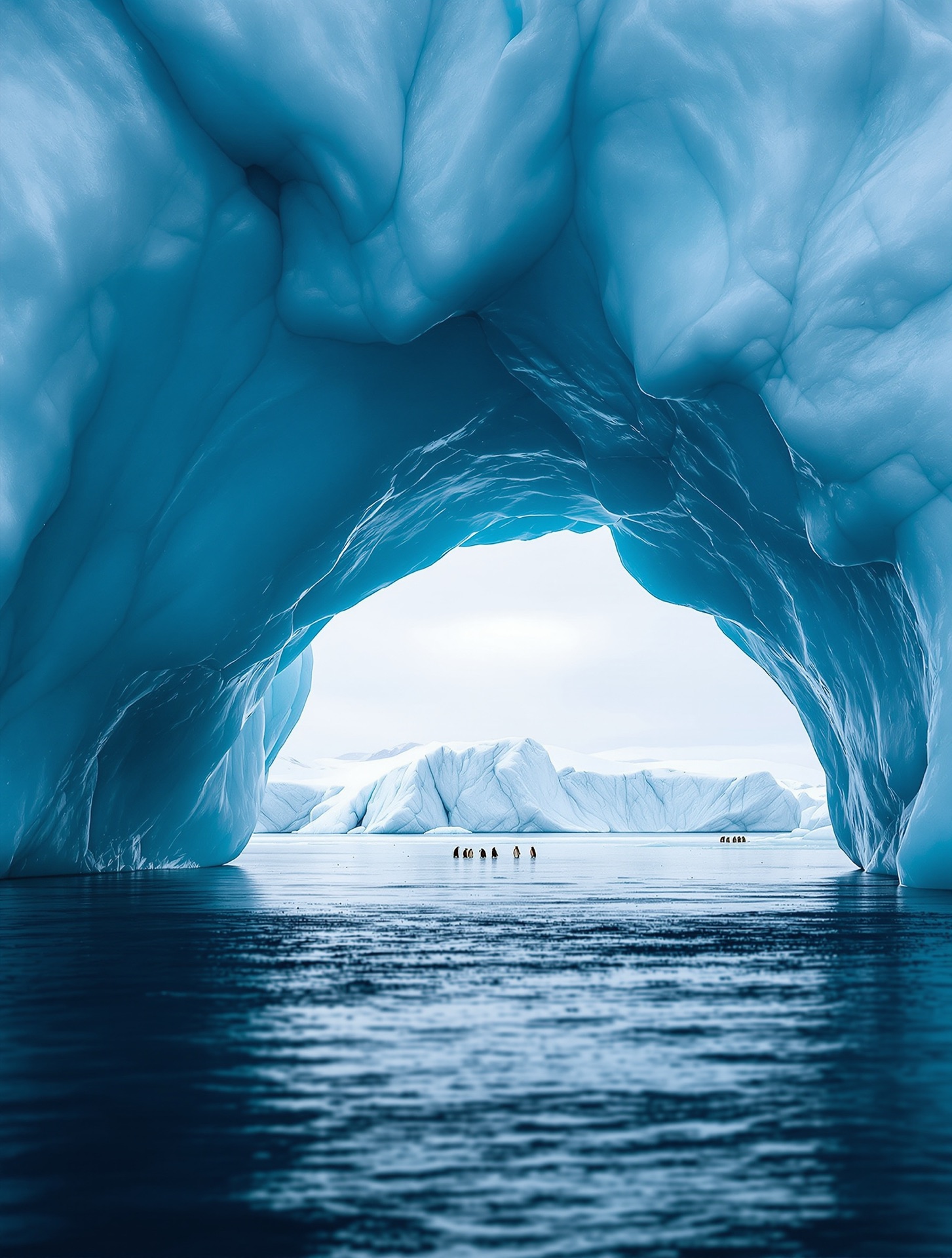
An iceberg the size of a church had melted clean through, leaving an arch — and through the arch, perfectly composed as if the continent were showing off, lay the white sea, a distant glacier front, and a scatter of penguins on a floe. Nobody spoke. I braced against the zodiac's pontoon and made the photograph through the opening: Antarctica, framed by Antarctica.
About Icebergs and the Peninsula
Icebergs calve from glaciers and ice shelves and then spend years being carved by water and weather into arches, caves and towers. The deep blue in old ice is real, not photographic trickery: dense, ancient ice absorbs the red end of the spectrum and gives back the blue. The Antarctic Peninsula, where this image was made, is among the fastest-warming places on Earth, and its ice is studied intensively by national programs such as the British Antarctic Survey. Every photograph of a great berg is a portrait of an individual that no longer exists; this arch likely collapsed within a season.
Visitors should know that wildlife and ice approaches in Antarctica are governed by strict treaty guidelines — distance, engine use, landing rules — and the photographs are better for it. Patience at a respectful distance is the entire craft.
Photographer's Notes
Made from a drifting zodiac with a standard zoom, exposure biased to hold detail in the white sea beyond the arch while keeping the blue shadow of the ice honest. A vertical composition, rare for this collection, because the arch demanded it. The print was offered tall and narrow, matted in black, and it became the quiet centerpiece of the Antarctic wall beside the Emperor Penguin Family and Last One In.