The Story Behind the Photograph
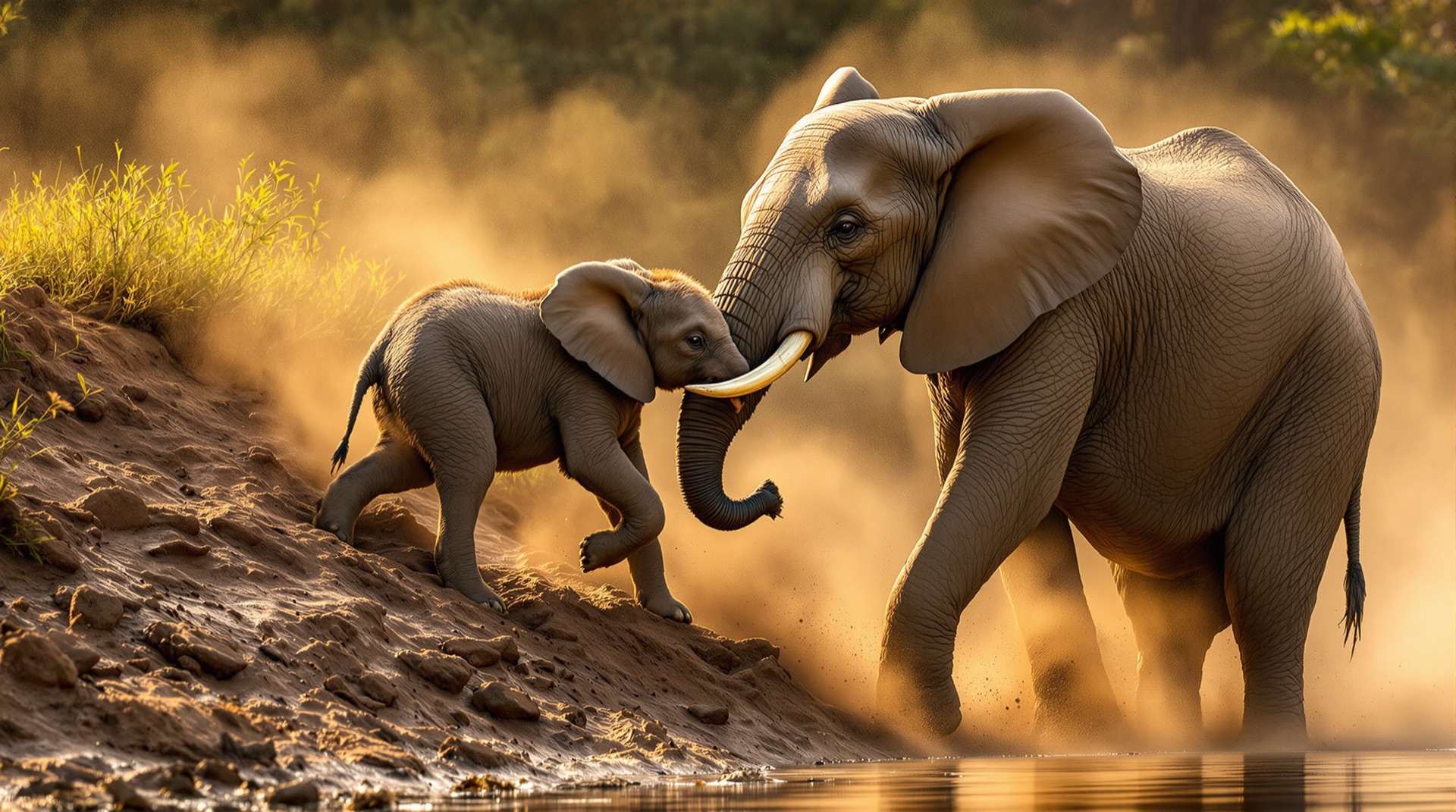
We had been parked at a river crossing since mid-morning, watching family after family of elephants come down to drink and cross. The adults made the far bank look easy. The calves did not. This little one — maybe a year old, all ears and opinions — hit the steep muddy section, slid back down twice, and let out a squeal that brought its mother around like she had been stung.
What happened next is the photograph: she planted herself below the calf, curled her trunk around its backside, and simply boosted it up the bank the way a parent boosts a toddler onto a porch. The calf scrambled over the top with all the dignity it had left, and the herd moved on as if nothing had happened. The entire rescue took perhaps eight seconds. I got three frames. This was the middle one.
About Elephant Mothers
African elephants raise their young inside one of the most cooperative family systems in the animal world. Calves are tended not only by their mothers but by aunts, older sisters and grandmothers — the matriarch's accumulated knowledge of rivers, droughts and crossings is the family's survival manual. A calf in trouble triggers an almost instant response from every adult within earshot. The African Wildlife Foundation documents both this extraordinary social intelligence and the poaching and habitat pressures that still threaten it.
Moments like this one are why photographers sit at river crossings for six hours. Elephant behavior cannot be predicted frame by frame, but it can be anticipated in general: where there are calves and steep mud, sooner or later there will be a helping hand.
Photographer's Notes
Made from a vehicle with a 400mm lens braced on a beanbag, shutter speed pushed high because everything in the frame was moving. The dust and the low afternoon sun did the rest. At the shows this print stopped mothers in particular; more than one told me, hand on heart, “That is exactly how it feels.” It hangs well beside Kilimanjaro Sunrise, made on the same journey south.