The Story Behind the Photograph
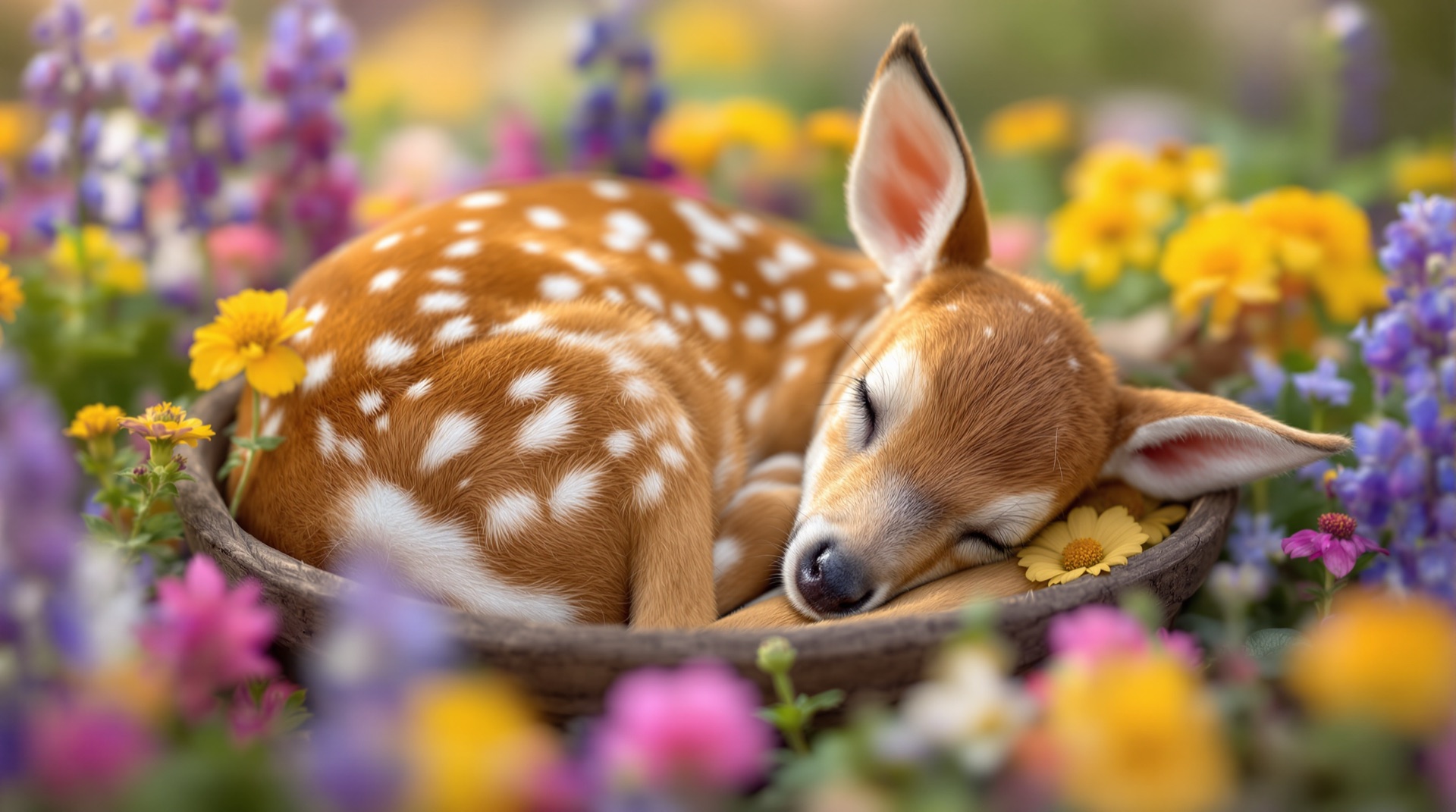
In June, the foothill meadows run riot — lupine, arrowleaf balsamroot, sticky geranium — and hidden in all that color, if you are very lucky and very careful, is the most perfectly camouflaged animal in North America: a newborn whitetail fawn, curled nose-to-tail, holding so still it barely seems to breathe.
I nearly stepped past this one. A doe had been feeding at the meadow edge with the particular studied casualness that means a fawn is stashed nearby, so I slowed down and started reading the ground. The fawn was bedded in a bowl of flowers no bigger than a dinner plate, spotted coat scattering the light exactly like the dappled shade around it. I made my photographs from a respectful distance with a long lens — perhaps ninety seconds of work — and backed away the way I had come. The doe returned the moment I was gone. The flowers closed over the whole secret.
About Whitetail Fawns
A whitetail fawn's first weeks depend on a strategy of near-invisibility: it has little scent, its spots mimic sun-dappled ground, and its instinct is absolute stillness while the doe feeds away from it to avoid drawing attention. People who find “abandoned” fawns are almost always finding perfectly healthy ones — the mother is nearby, waiting for the human to leave. Wildlife agencies and the National Wildlife Federation repeat the same advice every spring: leave fawns exactly where they lie.
That advice is also the photographer's code. The entire ethic of wildlife photography is concentrated in subjects like this one: the photograph only counts if the animal never paid for it.
Photographer's Notes
400mm lens from outside the fawn's comfort radius, wide open to melt the flowers into washes of color around that sleeping face, with the camera at ground level. Total time at the scene under two minutes by the watch — the picture matters less than the protocol. At the shows this was the print grandparents bought for nurseries, and it still may be the gentlest photograph in the collection. Its opposite number in mood is Snow Happens; between them they cover the whole Montana year.