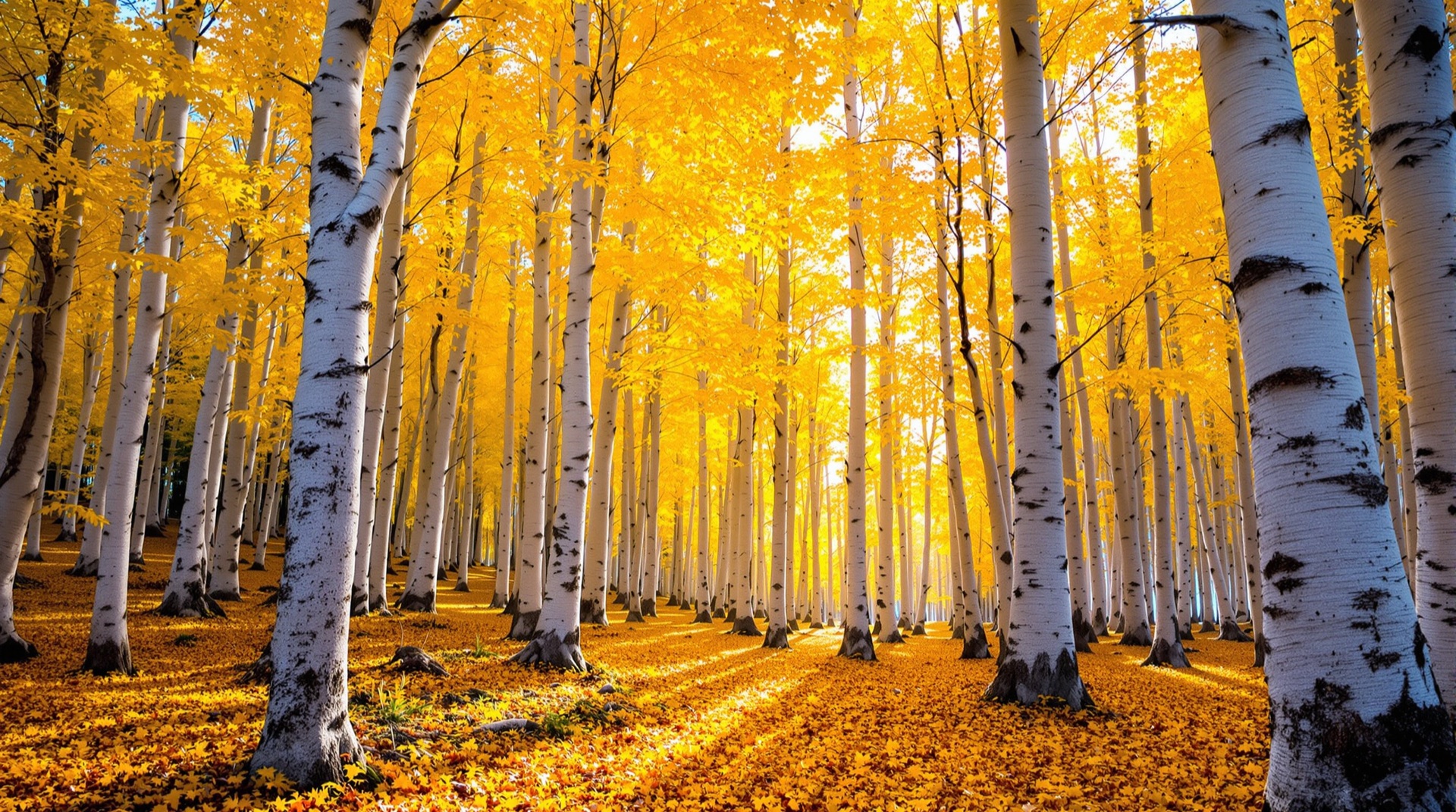
The Story Behind the Photograph
Aspen season in Colorado is a horse race against the weather: the gold arrives from the high country downslope, a band of color sliding lower each day, and one hard wind or wet snow can strip a hillside overnight. Photographers track the reports like brokers. I drove the San Juans for three days at the end of September, watching whole mountainsides turn as if a switch had been thrown.
This grove stopped the truck. It stood just off a high pass road, backlit by mid-morning sun, every leaf at peak and every trunk chalk-white against the glow — the light coming through the canopy rather than onto it, which is the entire secret of photographing aspens. I walked into the middle of the grove and the world turned gold in every direction, the leaves ticking against each other in the breeze with that sound aspens make, like soft applause.
About Aspen Groves
A grove like this one is usually a single living thing. Aspens spread by root sprouts, so a hillside of “trees” is often one organism — a clone — sharing one root system, which is why whole patches turn color in unison while the neighboring patch stays green a week longer. Utah's famous Pando clone, among the largest organisms on Earth, is the extreme case of what every aspen hillside is doing quietly. The U.S. Forest Service, which manages most of Colorado's high aspen country, publishes fall color guidance that amounts to the photographer's calendar.
Aspens also keep the mountain's memory: elk scrape their bark in winter, bears climb them and leave claw scars that gray with age, and old groves read like ledgers.
Colour arrives on a schedule the trees write themselves. Because a clone shares one root system, its leaves turn more or less together — which is why one hillside can go gold in a clean band while the grove beside it stays green for another week. A photographer scouting a pass at the end of September is really scouting clone boundaries, not elevations.
Photographer's Notes
Two photographs in one stop: the grove from outside with a telephoto to stack the trunks, and this frame from within, wide-angle, camera pointed slightly up to set white trunks against backlit gold. A polarizer, used sparingly, kept the sky honest without turning it black. This print was the gallery's autumn anchor, framed in light oak that matched the leaves, and it shares the high-country wall with the pika who lives two thousand feet above these trees.