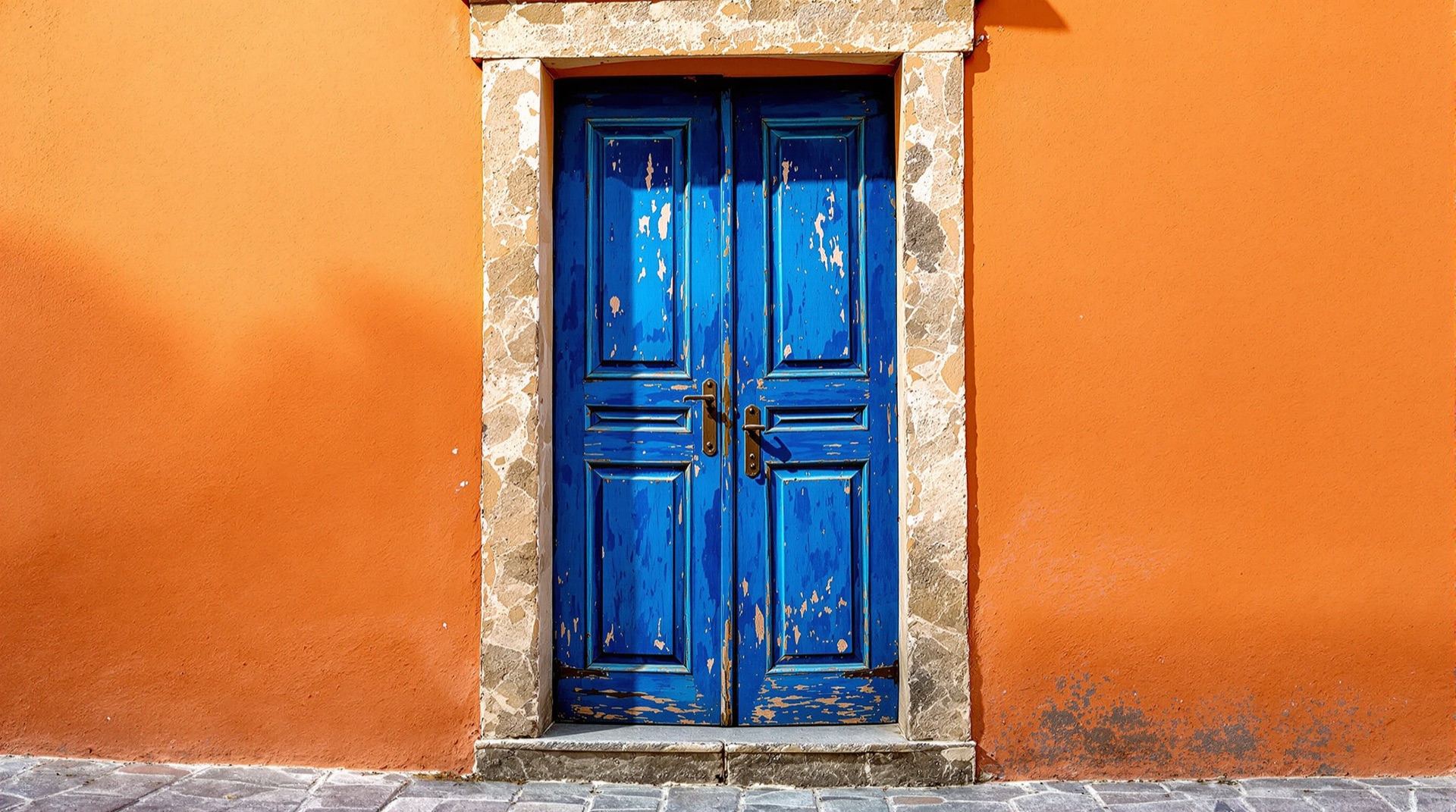
The Story Behind the Photograph
San Miguel de Allende is a town built entirely out of photographs; the only work is choosing among them. I spent a week there one winter walking the back streets in the early morning, before the doors opened and the burros and delivery trucks took over. This door stopped me on the second day and I came back to it four times.
It was the blue. Not a new blue — a blue that had been repainted over older blues for generations, chipping down through its own history, set in an ochre wall that the sun had been baking since the silver-road days. An old hinge, a hand-worn handle, a doorstep dished by a century of feet. The fourth morning gave me clean shadow across the lintel and a street empty in both directions, and the photograph finally agreed to be made.
About the Doors of San Miguel
San Miguel de Allende, in Mexico's central highlands, preserves one of the finest colonial-era streetscapes in the Americas — a legacy recognized by its inscription as a UNESCO World Heritage Site. The town's protective ordinances keep the historic center's walls in their traditional earth palette, which is why its famous doors photograph so richly: every color is bedded in ochre, terracotta and stone, and the doors themselves — carved, studded, painted, repainted — are the town's autobiography written one entrance at a time.
Door photography sounds simple and is not. The great doors are portraits, and like portraits they need the right light, an honest angle, and enough patience to wait out the parked scooter.
Photographer's Notes
Standard lens, square to the wall, in open shade to let the blue speak without highlight glare. The composition holds just enough ochre on every side to make the blue feel surrounded, the way it feels on the street. This print and the Irish Doors were the gallery's two great door pictures, and buyers split into camps with surprising passion. The San Miguel Collage on the next page settles the argument by refusing to choose at all.