The Story Behind the Photograph
Above treeline in the Rockies there is a sound like a squeeze toy being stepped on, and it is the most honest alarm system in the mountains. The pika — a fist-sized relative of the rabbit with round ears and a farmer's work ethic — announces every visitor to its talus slope, then goes straight back to work, because winter is coming and the hay will not gather itself.
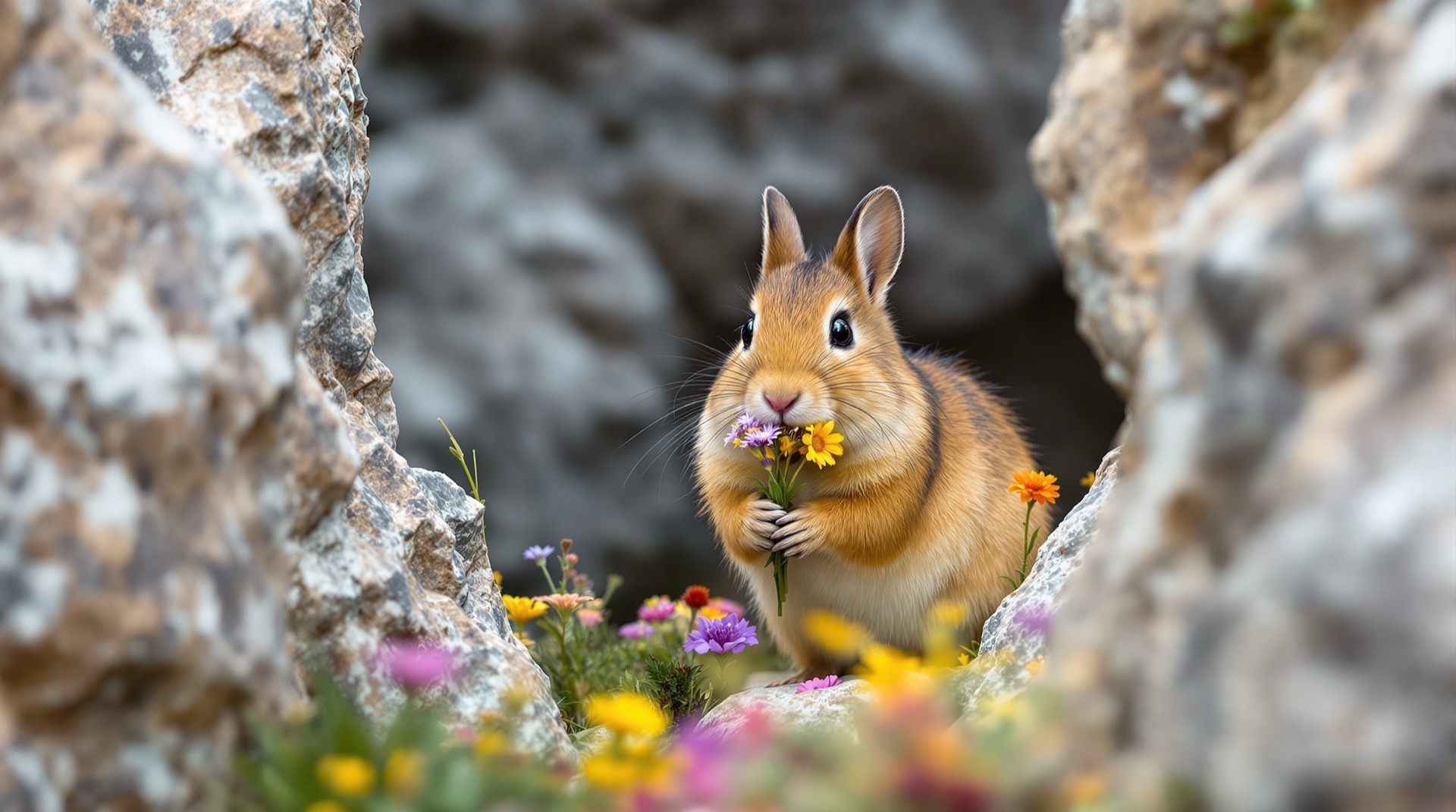
I spent an August afternoon flat on a boulder field at twelve thousand feet, lungs complaining, while pikas ran their harvest routes around me. This one had a favorite gap between two slabs of granite — its front door — and returned every few minutes with a fresh bouquet. I prefocused on the gap and waited. On about the tenth delivery it paused there, perfectly framed between the rocks with a mouthful of wildflowers, and gave me one heartbeat of stillness. Pikas do not give two.
About the American Pika
Pikas do not hibernate. Instead they spend the brief alpine summer cutting and curing vegetation into “haypiles” beneath the rocks — some containing tens of thousands of individual plant trips — and live off the stored hay all winter under the snow. Their dependence on cool talus slopes makes them sensitive sentinels of mountain climate, monitored by researchers and parks across the West, including Rocky Mountain National Park, where citizen-science pika projects have run for years.
For photographers, pikas are the ideal subject for a lesson in working a territory rather than chasing an animal: find the haypile, find the routes, settle in, and let the routine come to you.
A talus slope is also a lesson in microclimate. The jumbled rock stays markedly cooler than the open tundra beside it, and the air drifting up through the voids is what makes the arrangement livable in August at all. Read a slope the way a pika does and the shaded northern side holds the routes and the haypiles, while the sunny face — visually the prettier rock — holds almost nothing worth waiting for.
Photographer's Notes
300mm lens at close range — pikas allow surprising intimacy if you arrive slowly and stay low — with depth of field placed on the gap, not the animal, since the animal would only be there for an instant. The wildflower bouquet was the luck; everything else was the routine. Visitors at the shows assumed this was the easiest photograph on the wall. It was three hours of lying on sharp granite, and worth the bruises. Its high-country neighbor in the collection is Colorado Aspens, made two thousand feet below and one month later.