The Story Behind the Photograph
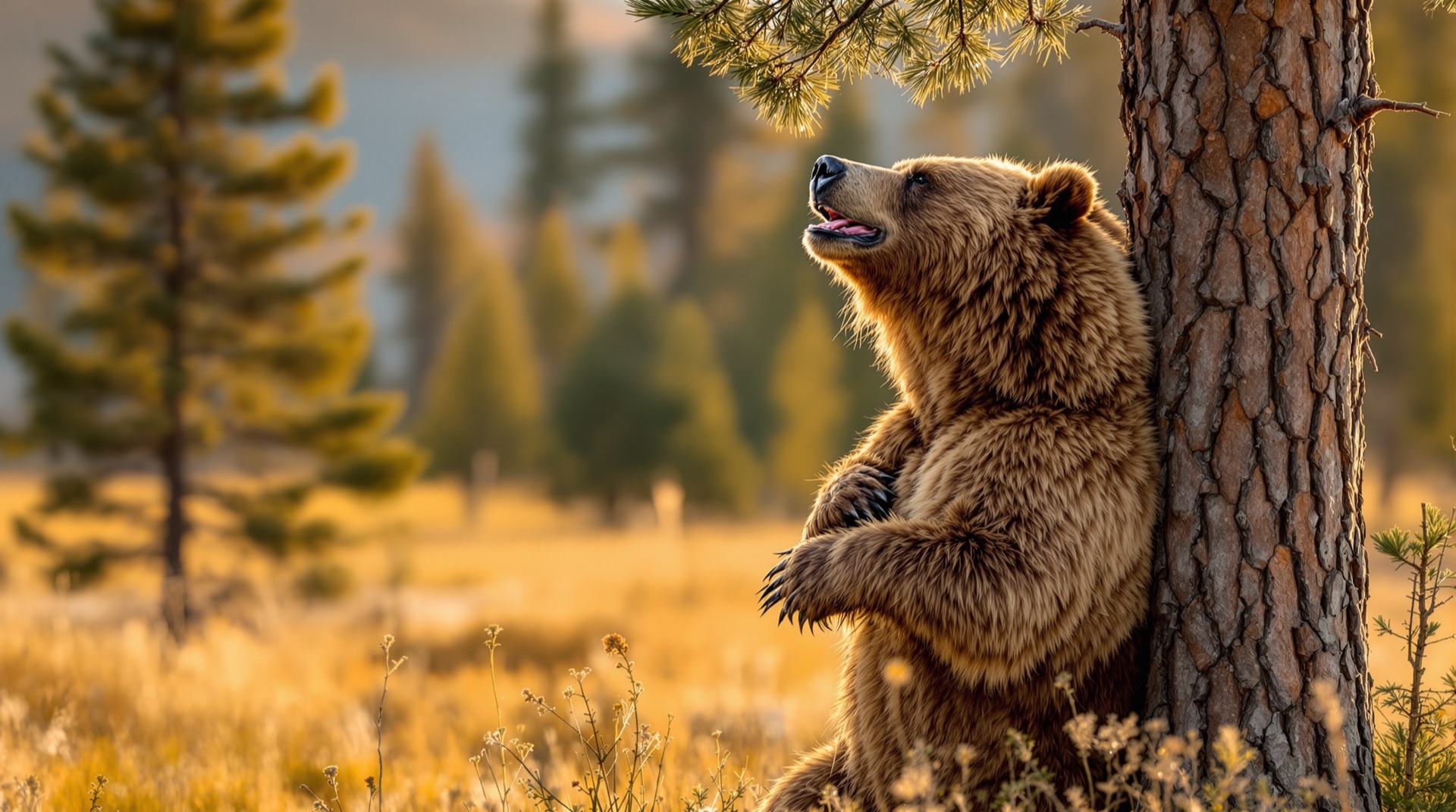
Bears have rub trees the way diners have favorite booths. This particular lodgepole pine stood at the edge of a meadow and was polished smooth at bear height, its bark worn glossy and tufted with snagged fur — a community message board used by every bear passing through the valley.
We had been glassing the meadow from a safe distance for two evenings when the big boar finally came to check his mail. He sniffed the trunk top to bottom, stood up against it, and then — there is no dignified way to describe this — danced. Back against the bark, hind legs driving, head thrown back, eyes shut, lower lip gone loose with pleasure. For a full minute the most dangerous animal in the lower 48 looked exactly like a man finally reaching the itch under his shoulder blade. The title named itself before the shutter cooled.
About Bear Rub Trees
Rub trees are serious business dressed up as comedy. Research in the northern Rockies — much of it using hair snagged on the very trees — shows bears use traditional rub sites for scent communication: who is in the valley, who is dominant, who is looking for a mate. Males rub most in breeding season, and the same trees are revisited for generations. The hair left behind has become one of science's best tools, providing DNA for the population studies that track grizzly recovery in the Yellowstone ecosystem.
Grizzly viewing carries real responsibilities: federal rules require keeping at least a hundred yards, and the long lens is as much a safety tool as an artistic one. The bear in this photograph never knew we existed, which is precisely how both parties preferred it.
Photographer's Notes
600mm from across the meadow at last light, tripod-mounted, shutter speed traded against the failing light because the motion blur in the swinging head only helped the story. One of the few wildlife photographs in the gallery where everyone — every single visitor — made the same sound on seeing it: a short laugh, then “ahh.” It hangs in the collection near Fawn and Flowers, the gentle end of the North American wall.