The Story Behind the Photograph
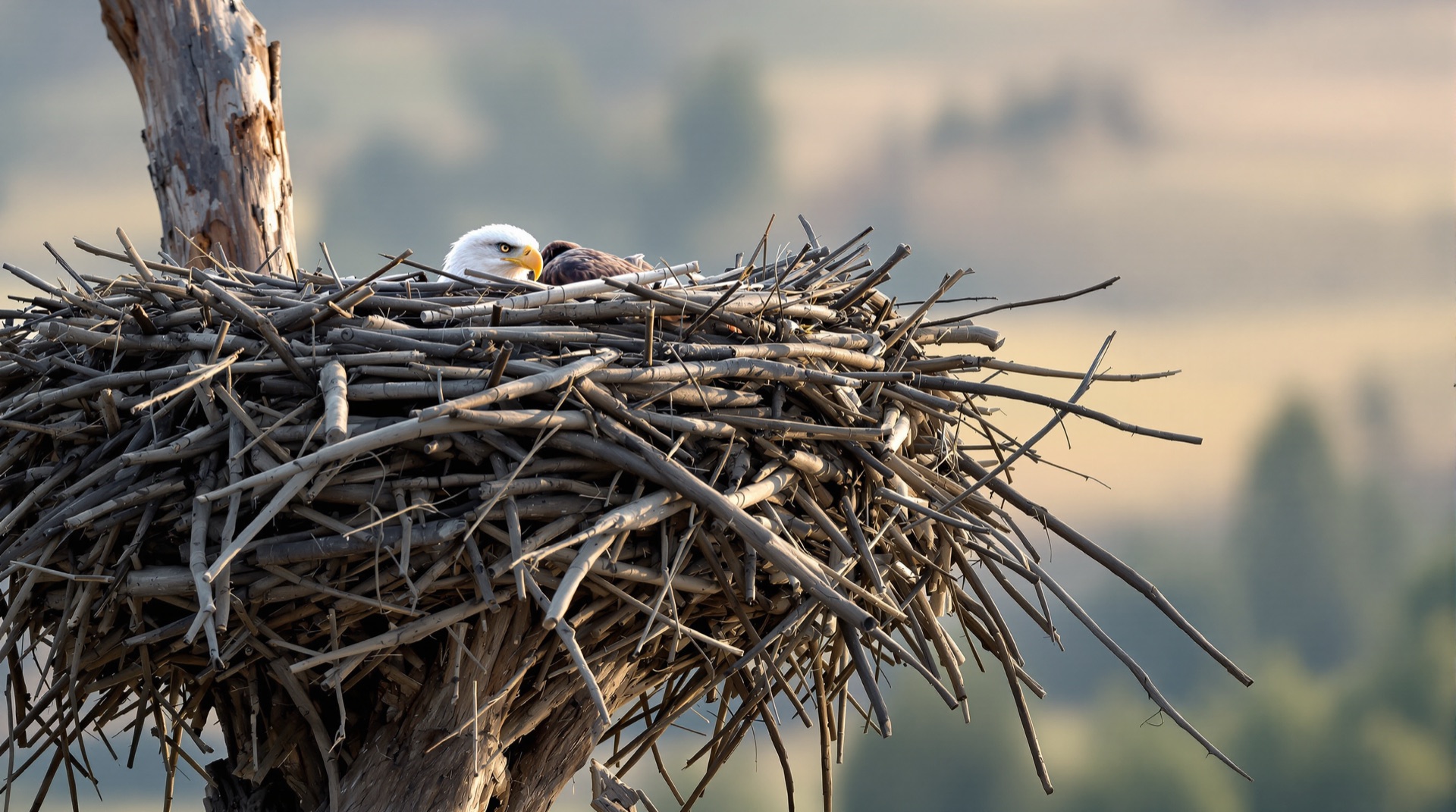
There is a particular look a bald eagle gives you when it has decided you are tolerable but not interesting, and this photograph is that look. The nest — a fortress of sticks the size of a kitchen table, built up over years in a broken-topped cottonwood — stood across the river from a public pullout, far enough that the birds had long since filed the cars under harmless.
I worked from the pullout across the water with the longest glass I owned, on a tripod, for the better part of three mornings. The sitting bird spent most of that time as a white crown barely visible above the rim. Then, on the third morning, an osprey drifted up the river valley, and the eagle rose just high enough to track it — head and shoulders over the nest rim, one golden eye swiveled my way for exactly two frames. That second frame is the photograph.
About Bald Eagle Nests
Bald eagles build the largest nests of any North American bird, returning year after year to add sticks until some nests weigh more than a small car. Pairs typically mate for years and defend the same river territory each season. The species' recovery — from a few hundred breeding pairs in the lower 48 states in the 1960s to well over three hundred thousand birds today — is one of conservation's great success stories, chronicled by the Cornell Lab of Ornithology. Nest sites remain protected by federal guidelines that specify keep-back distances; long lenses and riverbanks exist so that nobody has to test them.
The white head against dark sticks is a gift to photographers — but the photograph is in the eye, and the eye only comes up when something overhead is worth watching.
The nesting cycle also sets the photographer's calendar. An incubating bird sits low and shows almost nothing; the interesting behaviour — food deliveries, wing-stretching, the first clumsy branching of the young — comes weeks later, once the adults spend more time on the rim of the nest than down inside it. Knowing which week you are watching matters more than knowing which lens you brought.
Photographer's Notes
600mm with a teleconverter, tripod and cable release, across moving water that kept the air pleasantly free of heat shimmer. Patience ratio: three mornings to two frames. At the shows this hung beside Lunchtime, the flying half of the eagle pair, and buyers usually took them together — the watcher and the worker.