Please note: after many wonderful years, print sales through this website and at art shows have concluded. Collectors can learn how the prints were made. No orders can be placed.
The Craft of a Finished Print
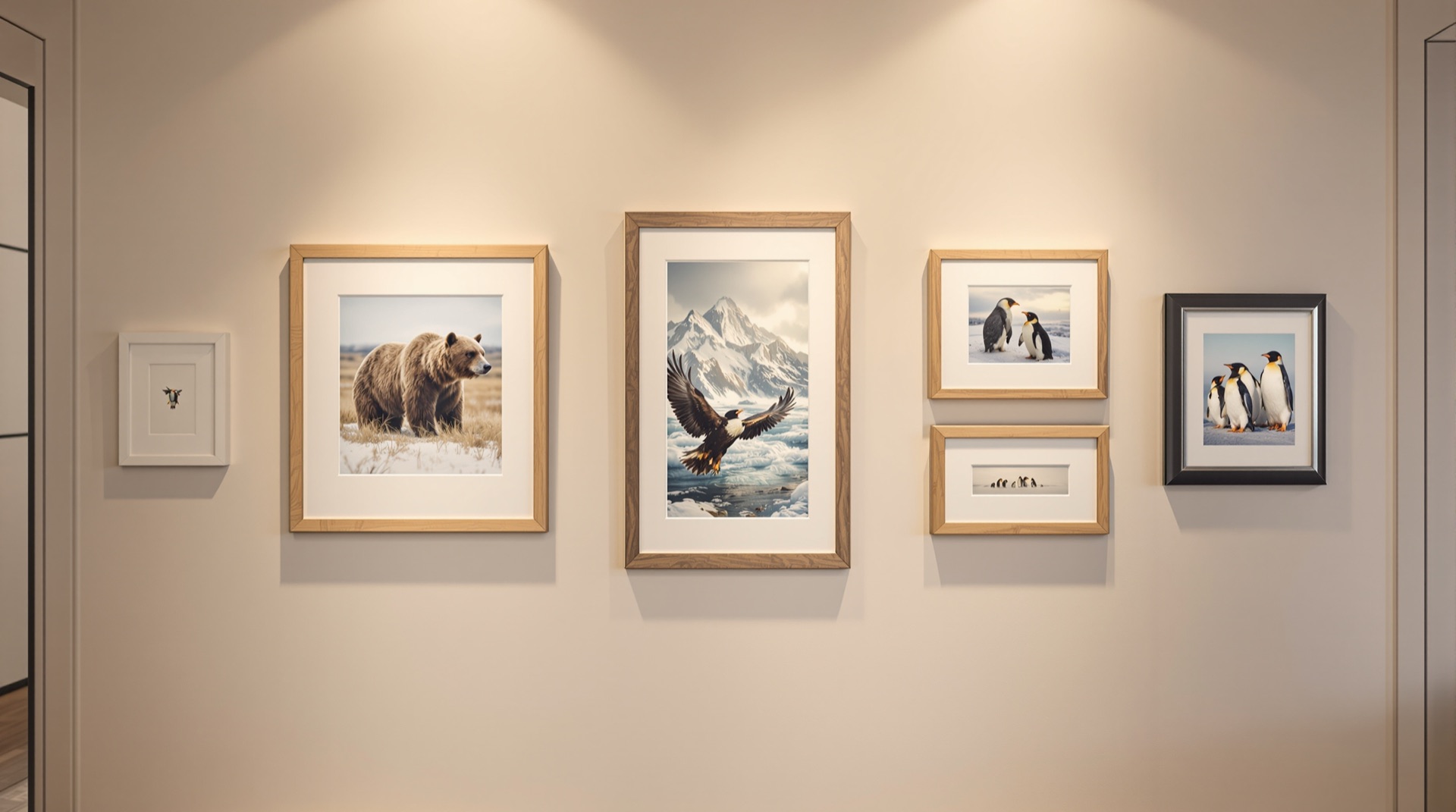
Every print that left the studio was finished the same careful way it had been since the first art show in 1989. Photographs were printed on professional photographic paper, then double matted by hand: an off-white top mat over a coordinating bottom mat, with the bottom mat color chosen to complement the photograph — dark brown for the warm African and autumn images, black for the high-contrast winter wildlife, light brown for the soft English and Provence scenes.
Framed prints were fitted in solid hardwood mouldings in four finishes: light oak, dark oak, black with a gray wash, and a gray barnwood-style frame that suited the western and winter subjects especially well. Glass, backing, dust seal and hanging wire were all installed in the studio, so a framed print arrived ready for the wall.
Sizes and Formats
The standard gallery sizes ran from 8x10 inches up to 20x30 inches, with panoramic images offered at 8x20 and 12x30. A favorite format was the triple — three related 5x7 or 8x10 photographs matted together in a single frame, such as a sequence of a wolf howling or three studies of running horses. Larger pieces were also produced as gallery-wrapped canvas in the later years.
Caring for a Print You Own
If you own a Mostly Wildlife print, a few simple habits will keep it beautiful for decades:
- Keep it out of direct sunlight. Even behind glass, prolonged direct sun will eventually shift any photographic print. North-facing walls are kindest.
- Avoid damp rooms. Bathrooms and unheated cabins are hard on paper and matting; stable indoor humidity is best. The Library of Congress publishes excellent guidance on caring for photographic materials.
- Dust the glass, not the print. If a print ever needs cleaning inside the frame, take it to a professional framer rather than opening it yourself.
- Re-mat with archival board. If you ever reframe, ask for acid-free, lignin-free matting — it is standard at any good frame shop today.
Why Sales Ended
The art-show life — the van, the tent, the long weekends of conversation with strangers who became friends — was a joy for nearly twenty years, but it is a young person's road. Rather than hand the work over to a print house with no connection to the photographs, the decision was made to simply let the editions stand. The photographs themselves remain freely viewable in the online gallery, where each one keeps the story of the morning it was made.
To everyone who carried a matted print home from a fair, hung a framed bear over the fireplace, or gave a penguin triple as a wedding gift: thank you. The prints were always meant to put a little of the wild on an indoor wall, and reports that they are still doing exactly that are the best payment there is.