The Story Behind the Photograph
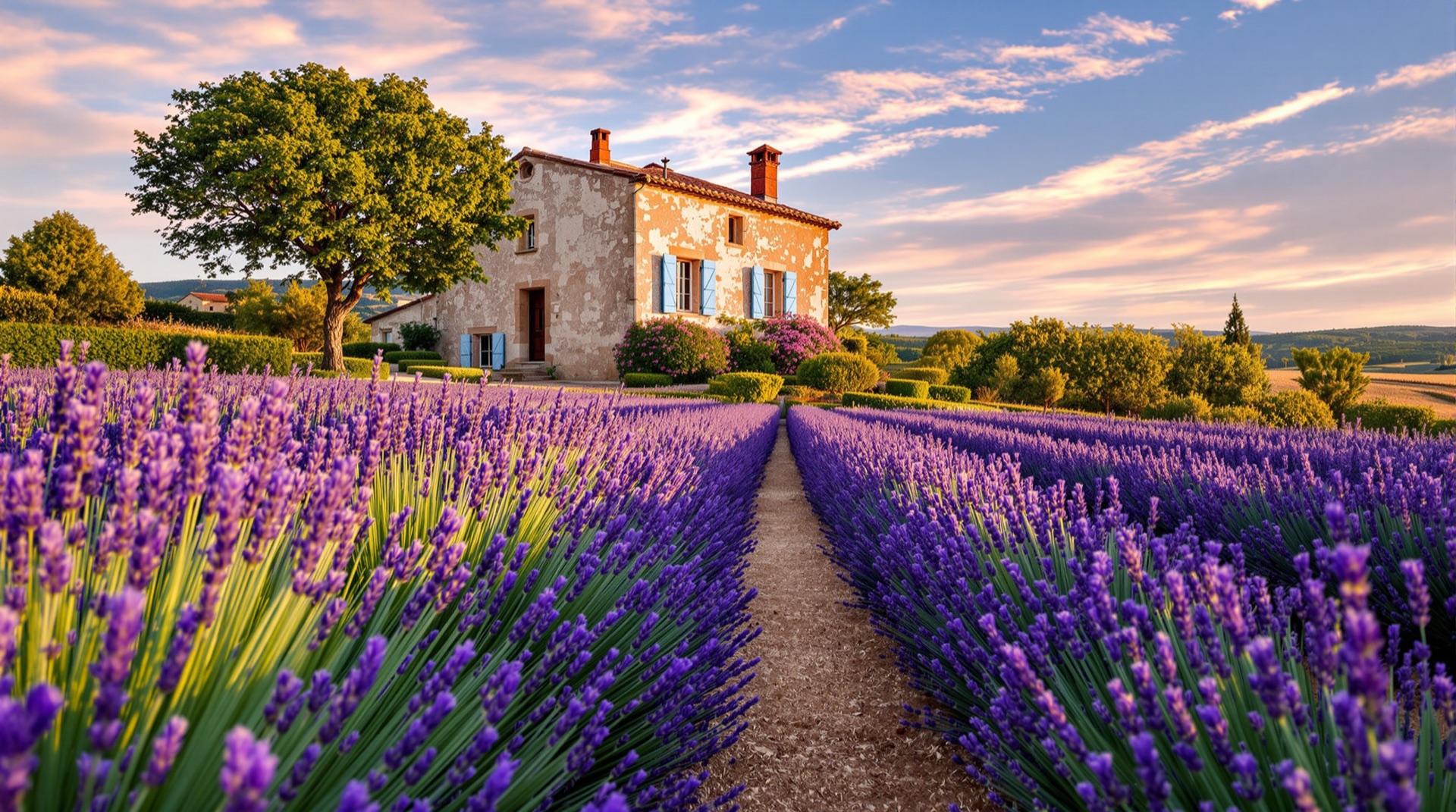
July in Provence smells like this photograph looks. I had been driving the Valensole plateau for two days looking for the right combination — full-bloom lavender, an honest old building, and clean light — and kept finding two out of three. Then, late on the second evening, this farmhouse appeared at the end of its own purple rows like it had been waiting since spring.
The light was nearly horizontal, the bees were still working, and the rows ran straight to the doorstep. I set up low so the lavender would stack into a solid field of color and made perhaps thirty frames as the stone warmed from gray to gold. A farmer on a tractor passed behind me twice and on the third pass simply shrugged, which in rural France is a signed permission slip.
About the Lavender of Provence
The high plateaus of Provence have grown lavender commercially for over a century, mostly lavandin, a hardy hybrid prized for its oil. The bloom peaks from late June through July, when whole hillsides turn the color of dusk and the air hums. The crop shaped the region's buildings too: the old stone mas farmhouses with their pale shutters were built from the same land the lavender grows on, which is why the two photograph so naturally together. France protects much of this working landscape through its regional natural parks; the Parc naturel régional du Verdon borders the Valensole plateau itself.
Photographers should know the unglamorous truth: lavender fields are full of bees, the mistral wind ruins more frames than bad light does, and the best photographs are made in the last hour of the day when both finally settle.
Photographer's Notes
Made with a wide-angle lens from knee height, stopped well down so the rows stay sharp from the nearest blossom to the farmhouse door. The low camera angle is the whole trick — standing height turns lavender into stripes; kneeling turns it into a sea. This print was framed almost exclusively in light oak, and it hung in the booth between the Burano Canal and the Old Vicarage, the warm heart of the European wall.