The Story Behind the Photograph
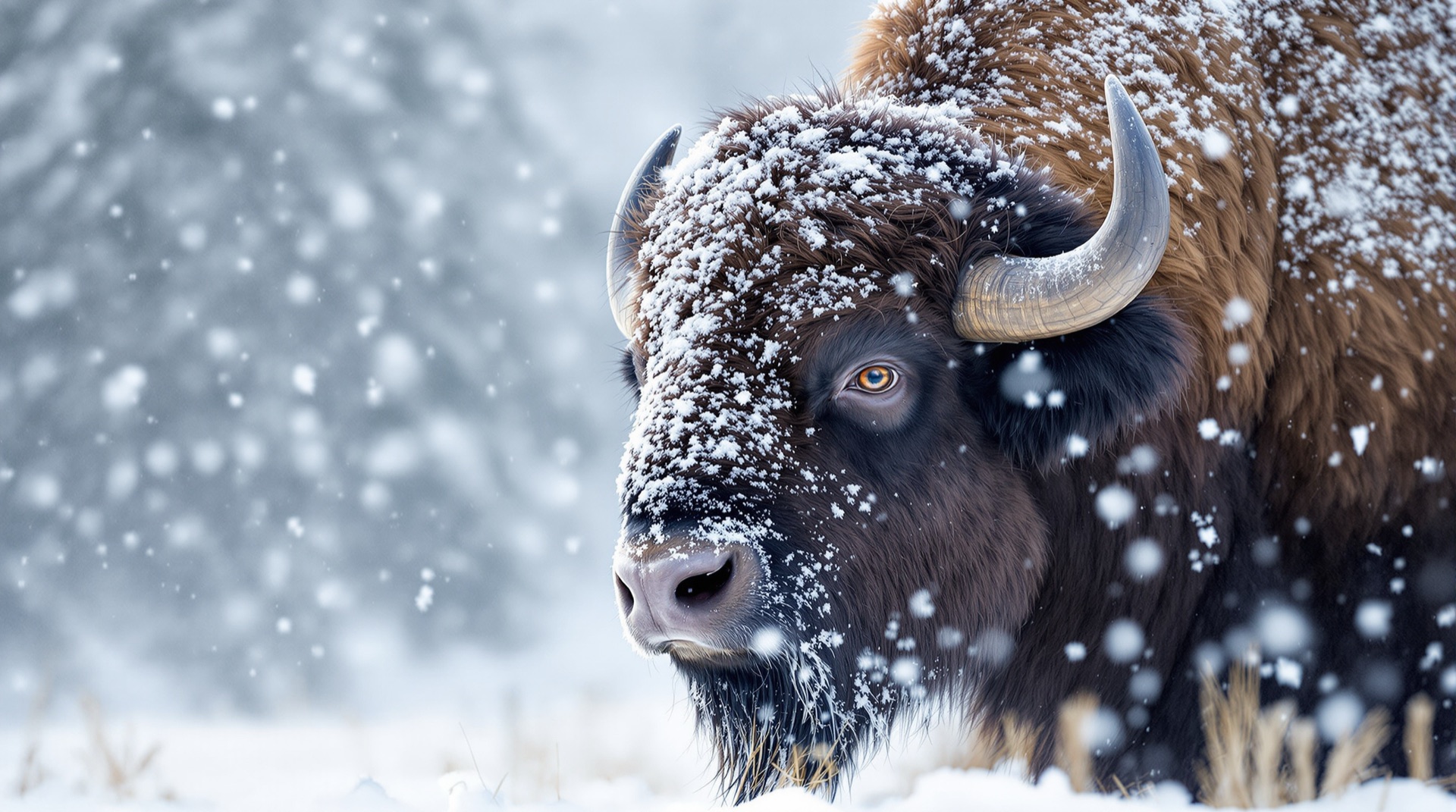
The storm had been working the valley all night, and by morning it was the kind of snow that erases the difference between ground and sky. We found the bison herd by sound — that deep, contented rumbling — before we could see them. Then the curtain thinned, and there he stood: a bull the size of a delivery van, every inch of his great head and hump plastered white, beard hung with ice, calmly sweeping snow aside with that head to get at the grass beneath.
He looked up at us once — a glance of complete indifference, snow avalanching off his brow — and went back to breakfast. The title arrived with the look. Other animals endure winter; bison simply file it under weather. I made the photograph close enough to fill the frame with that magnificent shrug and far enough to honor the fact that he was, after all, a wild bull bison.
About Bison in Winter
Bison are built for exactly this. A winter coat so insulating that snow lands on it and never melts; a massive head and neck evolved into a snowplow for cratering down to buried grass; and a metabolism that throttles down to ride out the cold months. Yellowstone is the only place in the United States where wild bison have lived continuously since prehistoric times, and the National Park Service documents both that survival story and the recovery that brought the species back from a few hundred animals to today's herds.
Winter is the great season for bison photography precisely because of pictures like this one: snow turns the most familiar animal in the park back into a myth.
Cratering is expensive work, though. A bull sweeping snow aside with his head is spending energy he cannot easily replace before spring, which is why herds drift toward wind-scoured ridges and warm thermal ground where the cover is thinnest. Watch a herd long enough in a storm and you can read the snow depth off the route they choose.
Photographer's Notes
Made with a 400mm lens from the road corridor in falling snow, exposure opened up well past the meter's opinion — snow scenes fool a camera into making everything gray, including the bison. The falling flakes between lens and animal added the veiling the storm deserved. At the shows, this was the photograph that sold to every homesick Westerner east of the Mississippi. It closes the gallery's winter set alongside Laid Back Bear and Mother's Protective Arms — three answers to the same cold question.