The Story Behind the Photograph
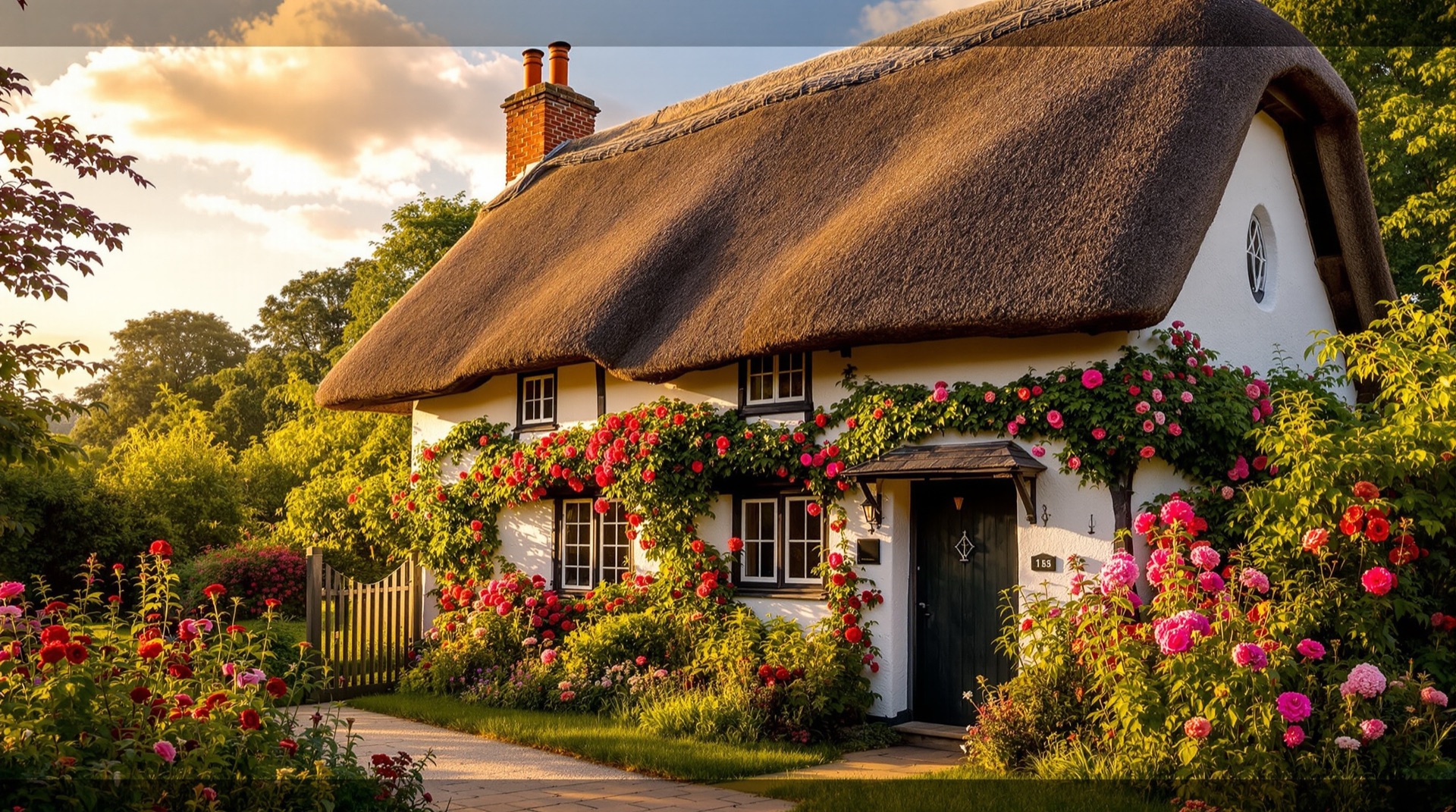
Some photographs you hunt; this one ambushed me. I was driving narrow lanes between villages, hopelessly lost in the best possible way, when the hedgerow opened and there it stood: thatch like a fresh haircut, roses around the door, hollyhocks leaning against the wall, and a cat in the gateway conducting inspections. The little sign on the gate read Rectory Cottage.
I parked badly, walked back, and worked the scene from the lane in the soft light of early evening. The cat passed my inspection and left. A neighbor leaned on the gate awhile and told me the thatch had just been redone by the same family of thatchers who had done it for three generations. England, in one sentence.
About the English Thatched Cottage
Thatch is one of the oldest roofing methods in the world, and southern England keeps the craft thoroughly alive: tens of thousands of thatched buildings survive, many of them listed and protected, their roofs renewed every few decades by master thatchers using water reed and wheat straw much as their predecessors did. The decorative ridge patterns — scallops, points, even straw pheasants — are a thatcher's signature. Historic England maintains the national listing that protects buildings like this one, roofline and all.
A rectory cottage, like the vicarage, belongs to the old ecclesiastical landscape of England — housing attached to the parish living. Most are private homes now, but their names keep the history on the gate.
Photographer's Notes
Standard lens from the lane, late light raking across the thatch to bring up its texture, framed to hold the roses, the door and the curve of the path in one settled composition. Matted in light brown, framed in light oak, and bought — more than once — by English expatriates who stood in front of it for a long quiet minute first. It is the companion piece to the Old Vicarage, photographed eleven years apart in identical weather, and the pair anchored the English corner of the booth for years.